

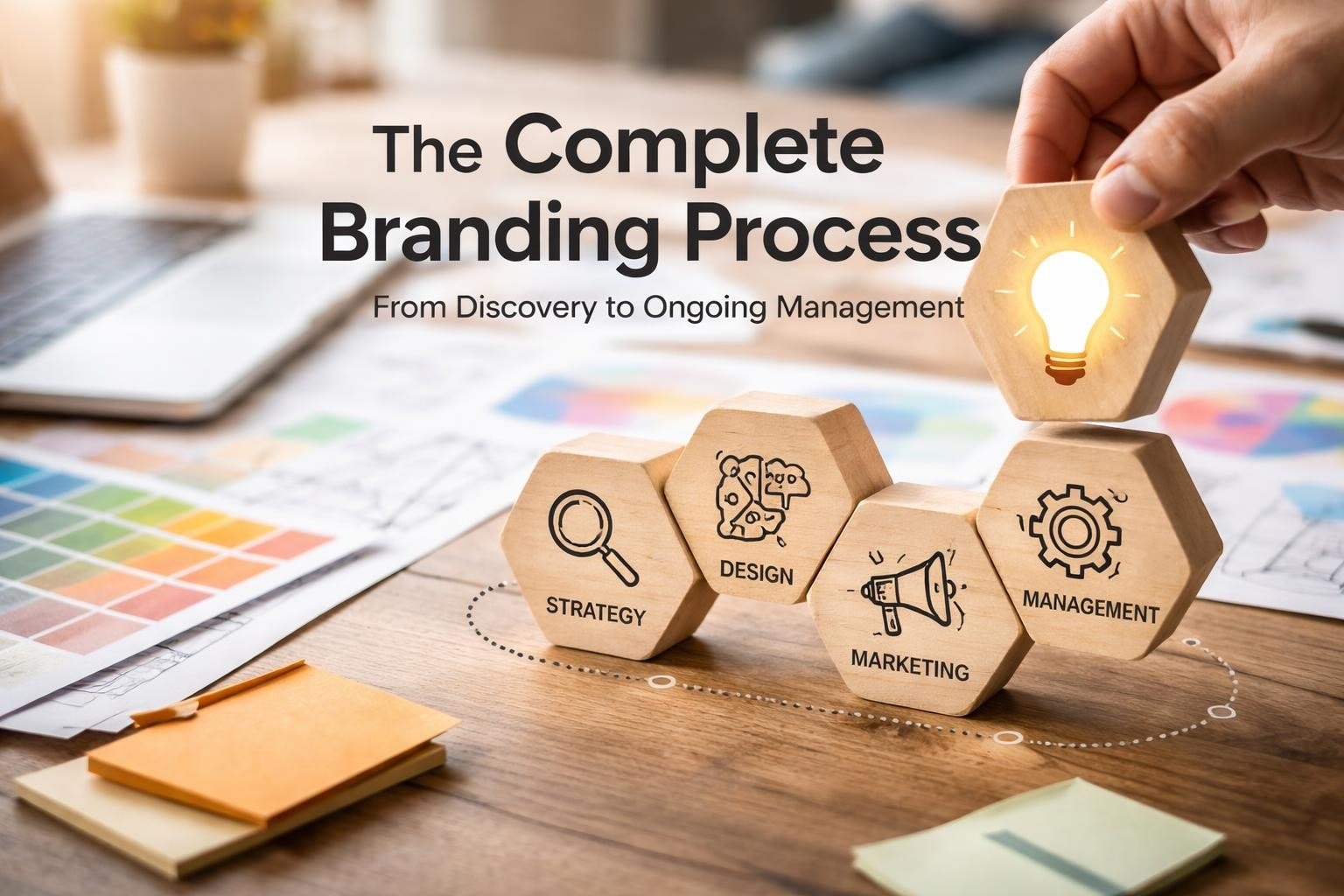
Have you ever wondered why some businesses in your community instantly feel trustworthy while others struggle to make an impression? The difference often comes down to strategic branding and working with the right creative partners. A branding and creative agency does more than design pretty logos-it builds the complete foundation for how your customers perceive, remember, and ultimately choose your business over competitors. In 2026, with digital noise at an all-time high and consumer attention spans shrinking, partnering with experts who understand both creative excellence and strategic marketing has become essential for small and medium-sized businesses looking to stand out in markets like Burnaby, Surrey, and Vancouver.
What Exactly Does a Branding and Creative Agency Do?
Let's clear up the confusion right from the start. You might think a branding and creative agency just handles your visual identity, but that's only scratching the surface.
These agencies serve as your strategic partner in building a comprehensive brand experience. They dig deep into understanding your business goals, target audience, and competitive landscape before a single design element gets created. Think of them as the architects of your business identity, crafting everything from your messaging and voice to your visual presence across all customer touchpoints.
The Core Services You Should Expect
When you partner with a professional agency, you're accessing a diverse skill set that would be nearly impossible to build in-house. Here's what comprehensive branding support looks like:
- Brand strategy and positioning that defines who you are and why customers should care
- Visual identity systems including logos, color palettes, typography, and imagery guidelines
- Messaging frameworks that articulate your value proposition clearly
- Website design and development optimized for user experience and conversions
- Content creation across various formats and platforms
- Digital marketing campaigns that bring your brand to life online
The beauty of working with a full-service branding and creative agency lies in the integration. When the same team handles your website design and development in Burnaby and your ongoing marketing campaigns, everything flows together seamlessly. Your brand voice remains consistent, your visuals align perfectly, and your customer experience feels cohesive from first impression through final purchase.

Why Small and Medium Businesses Need Professional Branding Now
You might be thinking, "Can't I just handle this myself with some online tools?" Sure, you could. But here's the reality check you need.
Your brand is making an impression whether you're intentionally managing it or not. Every inconsistent social media post, every mismatched color on your website, every unclear message about what you actually do-these all shape how potential customers perceive your credibility and professionalism.
The Competitive Landscape Has Shifted
In markets throughout British Columbia, from downtown Vancouver to suburban Surrey, your competitors are investing in their brand presence. Local businesses that once relied solely on word-of-mouth now need sophisticated digital strategies to capture attention and convert leads.
Consider these factors reshaping the business landscape:
- Digital-first customer journeys where your online presence determines if customers ever visit physically
- Increased consumer expectations for professional, seamless brand experiences
- Algorithm-driven visibility that rewards consistent, quality content
- Review economy dynamics where reputation management directly impacts revenue
- Mobile-dominant browsing requiring responsive, fast-loading digital assets
According to emerging trends in creative agencies for 2026, businesses that embrace integrated marketing approaches and professional brand development are outperforming those taking piecemeal approaches. The data speaks clearly: professional branding isn't a luxury anymore-it's a competitive necessity.
How to Choose the Right Branding and Creative Agency
Not all agencies are created equal, and finding the right partner can feel overwhelming. Let me walk you through what actually matters when making this important decision.
Look Beyond the Portfolio
Yes, their previous work matters, but don't let flashy case studies blind you to more important considerations. You need an agency that understands your specific market, serves businesses at your growth stage, and has demonstrated success in your industry or similar ones.
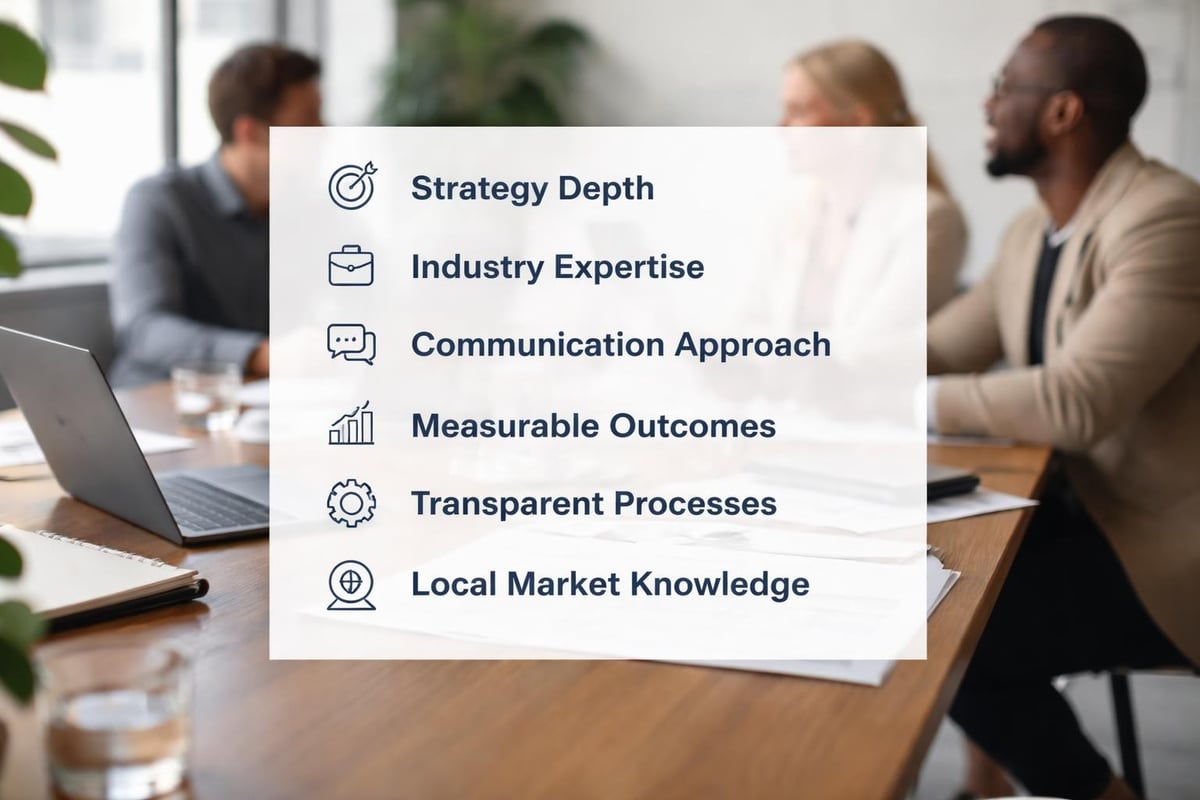
| Evaluation Criteria | Why It Matters | Questions to Ask |
|---|---|---|
| Strategic Thinking | Creative work needs business logic | How do they approach brand strategy before design? |
| Industry Experience | Faster understanding of your challenges | What similar businesses have they helped? |
| Communication Style | Determines working relationship quality | How often will you receive updates? |
| Measurable Results | Proves ROI beyond pretty designs | What metrics do they track and report? |
| Process Transparency | Prevents surprises and scope creep | What's included in each project phase? |
When choosing the right creative agency for your business, strategy should outweigh style. An agency might create stunning visuals that win design awards, but if those designs don't connect with your actual customers and drive business results, what's the point?
The Local Advantage
Working with a branding and creative agency familiar with your geographic market offers distinct advantages. They understand the cultural nuances of British Columbia communities, they know your competition, and they can attend in-person meetings when complex strategy sessions require face-to-face collaboration.
Local agencies bring:
- Understanding of regional consumer behaviors and preferences
- Knowledge of local market dynamics and seasonal patterns
- Ability to create location-specific campaigns that resonate
- Accessibility for collaborative working sessions
- Network connections within your community
For businesses focused on digital marketing in Burnaby or surrounding areas, an agency with deep local roots can navigate the specific challenges and opportunities in your market more effectively than distant partners working from spreadsheets.
The Modern Branding Process: What to Expect
Let's demystify what actually happens when you engage a professional agency. Understanding the process helps you prepare appropriately and set realistic expectations.
Discovery and Research Phase
Everything starts with understanding. A quality branding and creative agency won't jump straight into design concepts during your first meeting. Instead, they'll invest time learning about your business from multiple angles.
This phase typically includes:
- Stakeholder interviews to understand internal perspectives and goals
- Customer research to identify what actually drives your audience decisions
- Competitive analysis to find white space opportunities in your market
- Brand audit evaluating your current positioning and assets
- Market positioning workshops to define your unique value proposition
You should expect this discovery phase to feel thorough, possibly even exhaustive. Good agencies ask uncomfortable questions that force you to articulate things you've perhaps taken for granted. Why do customers really choose you? What emotional benefits does your service provide? If your brand were a person, how would you describe their personality?
Strategy Development
Once research concludes, strategy begins. This is where data transforms into direction, and insights become actionable frameworks. Your agency should deliver clear strategic documents that guide all subsequent creative work.
Key strategy deliverables include:
- Brand positioning statement articulating your unique market position
- Messaging architecture organizing key messages by audience segment
- Brand personality definition establishing tone, voice, and character
- Visual direction brief outlining aesthetic approach before design begins
- Implementation roadmap prioritizing which branding elements launch when
The best branding agencies invest heavily in this phase because strategy determines success. Without strategic clarity, even beautiful creative work falls flat because it doesn't connect with the right audiences in meaningful ways.
Creative Execution and Design Trends for 2026
Now we get to the exciting part-the actual creative work that brings your brand to life visually and verbally.
The Shift Toward Authentic, Human-Centered Design
Something interesting is happening in the design world right now. After years of minimalist, ultra-clean aesthetics dominating the landscape, we're seeing a pendulum swing toward warmer, more textured, and decidedly human approaches. This shift is partly a reaction to the proliferation of AI-generated visuals that often feel sterile and generic.
Current graphic design trends for 2026 emphasize texture, warmth, and tactile elements that communicate authenticity. For small businesses competing with larger corporations, this trend actually levels the playing field. Your brand can feel more personal, more approachable, and more genuine-qualities that resonate deeply with today's consumers who crave authentic connections with businesses they support.
Visual Identity Elements That Matter
Your visual identity extends far beyond your logo, though that's certainly an important anchor point. A comprehensive visual system includes:
| Design Component | Purpose | Implementation |
|---|---|---|
| Logo Suite | Primary brand mark | Multiple versions for different contexts |
| Color Palette | Emotional tone and recognition | Primary, secondary, and accent colors |
| Typography System | Readability and personality | Headline, body, and accent typefaces |
| Photography Style | Visual storytelling approach | Subject matter, composition, editing style |
| Graphic Elements | Visual consistency | Icons, patterns, illustrations |
| Layout Templates | Efficient brand application | Social media, documents, presentations |
A skilled branding and creative agency creates these systems with both consistency and flexibility in mind. You need enough structure to maintain brand recognition across touchpoints, but enough flexibility to adapt to different contexts without everything looking cookie-cutter identical.
Balancing Creativity With Business Objectives
Here's where many branding projects hit turbulence. You want creative work that stands out and wins awards, but you also need designs that actually drive business results. How do agencies navigate this tension?
The Data-Creativity Integration
The most effective agencies don't see creativity and analytics as opposing forces. Instead, they use data to inform creative decisions, then measure creative work against business metrics to continuously refine approaches.
This looks like:
- A/B testing different design approaches to identify what resonates
- User behavior analysis informing website design and user experience decisions
- Conversion tracking measuring which brand messages drive actual customer action
- Sentiment monitoring gauging emotional responses to brand elements
- Performance benchmarking comparing results against industry standards
Balancing creative innovation with client expectations requires clear communication from the start. Your agency should establish measurable objectives before creative work begins, then design specifically to achieve those outcomes.

Implementing Your Brand Across Digital Channels
Creating beautiful brand assets means nothing if they sit unused on your hard drive. Implementation is where branding becomes tangible and starts generating returns.
Your Website as Brand Headquarters
Everything flows from your website in 2026. It's your digital storefront, your credibility validator, and often the deciding factor in whether prospects become customers. Your branding and creative agency should approach web design in Vancouver or any location with both aesthetic excellence and conversion optimization in mind.
Essential website branding elements:
- Homepage that immediately communicates your value proposition
- Consistent visual language across all pages
- Clear calls-to-action aligned with customer journey stages
- Mobile-responsive design that maintains brand integrity on any device
- Page load speeds that prevent user frustration
- Accessibility features ensuring inclusive user experiences
Your website needs to embody your brand while also serving practical business functions. The design should feel distinctly "you" while guiding visitors toward desired actions, whether that's requesting quotes, booking consultations, or making purchases.
Social Media and Content Marketing
Your brand needs to live consistently across every platform where your customers spend time. This doesn't mean identical content everywhere-each platform has unique conventions and audience expectations. It means maintaining recognizable brand elements while adapting format and tone appropriately.
When developing advertising and marketing campaigns in Surrey or neighboring markets, your agency should ensure brand consistency across:
- Social media profiles with cohesive visual branding and bio messaging
- Content calendars that reflect brand personality in every post
- Paid advertising creative that extends brand recognition
- Email marketing templates maintaining visual and verbal consistency
- Video content incorporating brand colors, fonts, and messaging
- Print materials when physical touchpoints still matter for your business
The challenge lies in maintaining consistency without becoming monotonous. Your brand should feel recognizable without every piece of content looking cookie-cutter identical.
Measuring Branding Success and ROI
Let's address the elephant in the room: how do you measure the return on investment for branding work? Unlike paid advertising where you can track every click and conversion, branding impact often unfolds over longer timeframes.
Metrics That Actually Matter
Smart agencies track both leading and lagging indicators of brand health. Here's what you should monitor:
Awareness Metrics:
- Search volume for your brand name
- Direct website traffic trends
- Social media follower growth and engagement rates
- Mention volume across digital platforms
Perception Metrics:
- Customer survey results on brand attributes
- Review sentiment and ratings
- Net Promoter Score trends
- Share of voice compared to competitors
Business Impact Metrics:
- Customer acquisition cost trends
- Conversion rate improvements
- Average transaction value changes
- Customer lifetime value growth
- Referral and repeat business rates
A professional branding and creative agency will establish baseline measurements before launching new brand initiatives, then track these metrics over time to demonstrate impact. Some results appear quickly-a new website might boost conversions within weeks. Other benefits emerge gradually as brand recognition builds and reputation strengthens.
The Evolving Agency-Client Relationship
The way businesses and creative agencies collaborate is shifting significantly in 2026. Gone are the days of purely transactional project work where you hire an agency, they deliver assets, and everyone moves on.
From Vendors to Strategic Partners
The trends reshaping brand-agency relationships point toward deeper, more integrated partnerships. Successful businesses increasingly view their creative agency as an extension of their team rather than an external vendor.
This partnership model offers several advantages:
- Deeper brand understanding that improves over time as agencies learn your business intimately
- Faster execution since partners already know your preferences, audiences, and objectives
- Strategic continuity maintaining consistent brand evolution rather than disconnected campaigns
- Proactive recommendations where agencies identify opportunities before you request specific projects
- Collaborative innovation combining your industry expertise with their creative and marketing skills
Building this type of relationship requires investment from both sides. You need to share information openly, involve your agency in strategic discussions, and provide honest feedback. Your agency needs to demonstrate initiative, bring ideas proactively, and prove they're genuinely invested in your success beyond billable hours.
Communication Frameworks That Work
Best practices for collaborating with design and brand agencies emphasize establishing clear communication patterns from day one. Uncertainty about when you'll hear updates or how to provide feedback creates unnecessary friction.
Effective communication structures include:
| Communication Type | Frequency | Purpose |
|---|---|---|
| Strategic check-ins | Monthly | Review progress against goals, adjust strategy |
| Project updates | Weekly | Status reports on active initiatives |
| Creative reviews | As needed | Feedback sessions on design concepts |
| Performance reports | Quarterly | Deep dive into metrics and ROI |
| Planning sessions | Quarterly | Map upcoming campaigns and priorities |
Establishing these rhythms prevents both the "radio silence" problem where you wonder what's happening and the "constant interruption" issue where every minor decision requires a meeting.
Building Long-Term Brand Equity
Here's what often gets missed in branding discussions: the work never truly ends. Your brand is a living entity that grows, evolves, and requires ongoing attention and refinement.
The Compound Effect of Consistent Branding
Think of brand building like investing. Small, consistent contributions over time generate compound returns that eventually create substantial value. Every customer interaction, every piece of content, every visual touchpoint either reinforces or undermines your brand positioning.
When you maintain consistency across months and years, several things happen:
- Recognition strengthens as audiences encounter your brand repeatedly
- Trust deepens through predictable, reliable brand experiences
- Differentiation clarifies as consistent positioning separates you from competitors
- Efficiency improves as established systems make content creation faster
- Value increases as brand equity becomes a genuine business asset
A quality branding and creative agency helps you maintain this consistency even as your business grows and evolves. They document brand guidelines, establish templates and systems, and ensure new team members understand how to represent your brand properly.
When to Refresh Versus Reinvent
Your brand shouldn't remain frozen forever, but dramatic overhauls can confuse customers and destroy hard-won recognition. How do you know when evolution is needed?
Consider refreshing when:
- Your visual identity feels dated compared to current design standards
- Your messaging no longer resonates with your target audience
- Your business has evolved significantly beyond your original positioning
- Customer research reveals confusion about what you offer
- You're expanding into new markets or service areas
Avoid complete rebrands unless:
- Your business model has fundamentally changed
- You've experienced significant reputation damage requiring a fresh start
- You're merging with another company
- Legal issues force name or identity changes
Most businesses benefit from periodic refreshes that modernize aesthetics and refine messaging while maintaining core brand equity. Your agency should guide these decisions strategically, using data and customer insights rather than personal preferences or boredom with current branding.
Industry-Specific Branding Considerations
Different industries face unique branding challenges and opportunities. A branding and creative agency with diverse experience can adapt strategies to your specific sector.
Service-Based Business Branding
For businesses selling services rather than products, branding carries extra weight because you're asking customers to trust you before experiencing tangible results. Whether you're in real estate, interior design, or professional services, your brand needs to communicate expertise, reliability, and value.
Service businesses benefit from:
- Personal branding elements highlighting team expertise and personality
- Case studies and testimonials providing social proof
- Educational content demonstrating knowledge and building authority
- Process transparency reducing anxiety about what working together involves
- Responsive communication in branding that mirrors desired service experience
For specialized fields, understanding industry nuances matters tremendously. An agency familiar with marketing strategies for restaurants in Vancouver knows different approaches work compared to growing interior design businesses or tackling real estate challenges.
Local Business Branding
If your customers primarily come from specific geographic areas, your branding should reflect local identity while avoiding clichés. Generic "beautiful British Columbia" imagery might look nice but does little to differentiate your business.
Effective local branding includes:
- Community involvement and partnership visibility
- Local landmark references that resonate with residents
- Service area specificity in messaging
- Regional dialect and cultural nuances in copywriting
- Location-based SEO integration throughout digital presence
Integrating Traditional and Digital Branding
Despite living in an increasingly digital world, physical branding touchpoints still matter for many businesses. The challenge lies in creating seamless experiences across both realms.
Omnichannel Brand Consistency
Your customer might discover you on Instagram, research you through Google, visit your website, then walk into your physical location. At each touchpoint, they should encounter a consistent brand that feels cohesive and intentional.
A comprehensive branding and creative agency manages this integration by:
- Developing advertising and marketing campaigns in Vancouver that work across channels
- Creating brand guidelines covering both digital and print applications
- Designing visual systems that translate across media formats
- Ensuring messaging consistency from social media to storefront signage
- Coordinating campaign timing across online and offline channels
Top digital marketing trends for 2026 emphasize this omnichannel approach, recognizing that customers don't think in channel silos. They just experience your brand, and inconsistency creates confusion that erodes trust.
Print Materials in a Digital Age
Yes, business cards, brochures, and signage still matter. While digital channels dominate customer acquisition, physical materials often seal the deal at crucial decision moments. Your printed materials should extend digital brand experiences, not contradict them.
Key print considerations:
- Color matching ensuring printed colors align with digital palettes
- Font licensing verifying typefaces work in both environments
- Scalability designing logos and graphics that reproduce well at any size
- Material selection choosing papers and finishes that reflect brand personality
- Environmental considerations using sustainable options when brand values prioritize ecology
Strategic Planning for Brand Growth
Let's wrap this up with action steps. You understand what a branding and creative agency does, why professional branding matters, and how to evaluate potential partners. Now what?
Creating Your Branding Roadmap
Start by honestly assessing your current brand maturity. Where are the biggest gaps between where you are and where you need to be? A simple framework helps prioritize:
| Brand Element | Current State (1-5) | Importance (1-5) | Priority Score |
|---|---|---|---|
| Visual Identity | 2 | 5 | 10 |
| Website Experience | 3 | 5 | 15 |
| Brand Messaging | 2 | 4 | 8 |
| Content Marketing | 1 | 4 | 4 |
| Social Presence | 2 | 3 | 6 |
Multiply current state by importance to identify priority scores. This data-driven approach prevents tackling everything simultaneously (recipe for overwhelm) while ensuring you address high-impact gaps first.
Budget and Timeline Realities
Professional branding requires investment. While costs vary based on scope and agency, expect comprehensive branding projects to span several months and require meaningful budget allocation.
Typical investment ranges for SMBs:
- Logo and basic visual identity: $3,000-$8,000
- Complete brand strategy and identity: $10,000-$25,000
- Brand launch with website and marketing materials: $20,000-$50,000
- Ongoing brand management and marketing: $2,000-$10,000 monthly
Rather than viewing this as expense, frame it as investment in business infrastructure. Quality branding increases customer acquisition efficiency, supports premium pricing, and builds equity that appreciates over time.
For businesses creating an outstanding marketing plan, branding should occupy a significant portion of your marketing budget, especially in early growth stages when establishing market presence matters most.
Taking the First Step
You don't need to have everything figured out before contacting an agency. In fact, part of their value lies in helping you clarify what you actually need. Start by:
- Documenting your business goals for the next 12-36 months
- Gathering examples of brands you admire (and why)
- Identifying specific pain points in your current branding
- Listing questions you need answered about branding approaches
- Researching agencies that serve businesses like yours
The right branding and creative agency will approach that initial conversation as a consultation, not a sales pitch. They'll ask questions, offer preliminary insights, and help you understand what's possible before discussing specific project scopes or pricing.
Investing in professional branding transforms how customers perceive and engage with your business, creating competitive advantages that compound over time. Whether you're launching a new venture or refreshing an established brand, the strategic expertise and creative excellence that agencies provide accelerates growth in ways DIY approaches simply can't match. If you're ready to elevate your brand presence throughout Burnaby, Surrey, Vancouver, and surrounding communities, CLiX combines strategic thinking with creative innovation to help small and medium-sized businesses build brands that convert browsers into loyal customers. Let's start a conversation about where your brand is today and where it could be tomorrow.
Article written using RankPill.